

Alector Brain Carrier (ABC)
Alector Brain Carrier (ABC) is our proprietary blood-brain barrier platform – designed to deliver therapeutics deep into the brain, across multiple modalities, with convenient scalable, peripheral delivery and at doses that could make treatments safer and more accessible for patients.
The Challenge
One of the greatest challenges in treating neurodegenerative diseases is delivering effective therapeutics across the blood-brain barrier. The blood-brain barrier plays a critical role in maintaining homeostasis and protecting the brain by restricting the entry of potentially harmful substances. However, this protective function presents significant challenges for delivering therapeutics that need to cross the blood-brain barrier to achieve optimal efficacy.
How ABC Works
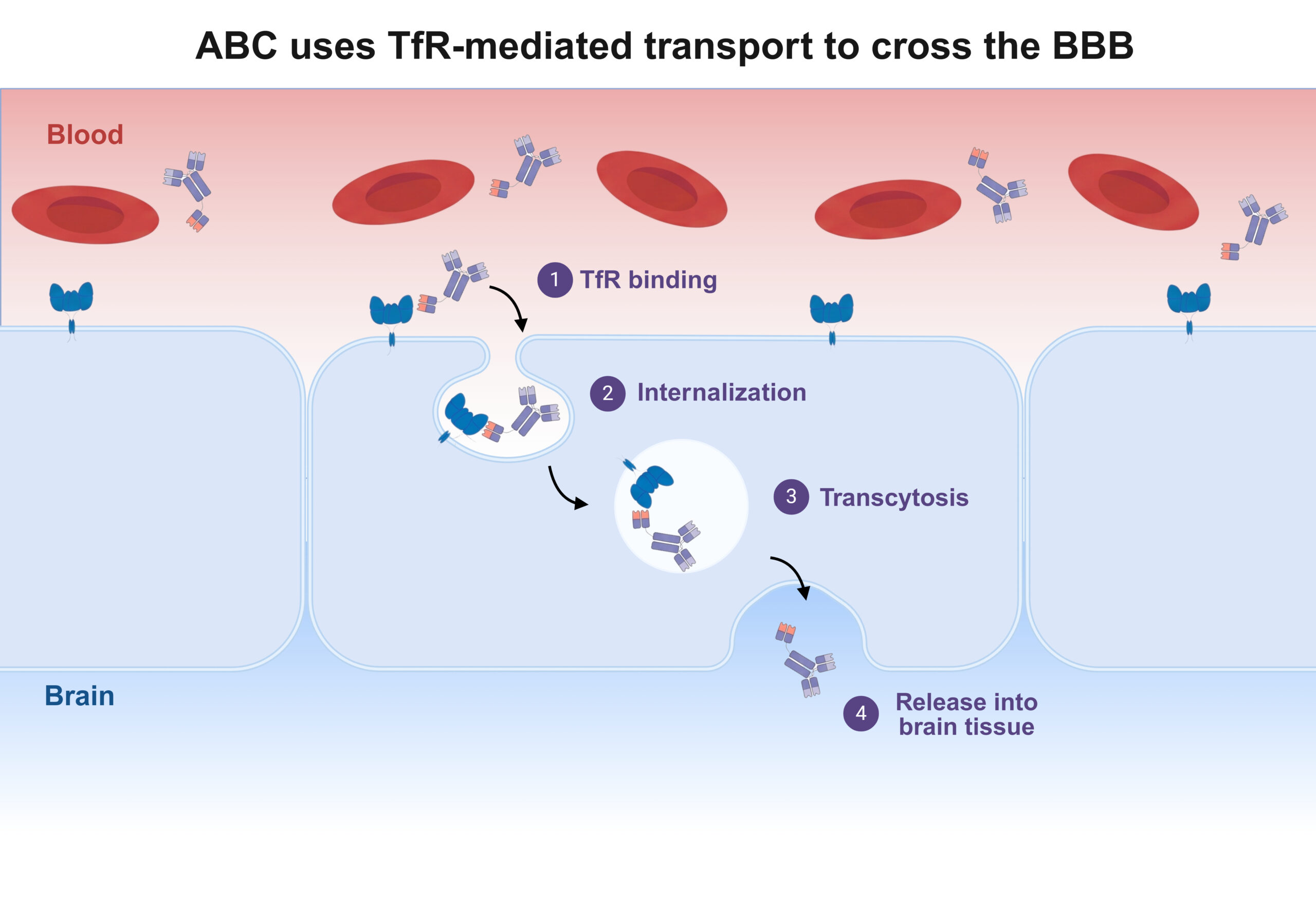
ABC utilizes receptor-mediated transcytosis, a process in which therapeutic molecules are transported across the blood-brain barrier (BBB) by binding to specific receptors on endothelial cells – using these receptors as a conduit to enter the brain. Given the brain’s highly vascularized nature, receptor-mediated transcytosis offers a route by which the BBB can be transformed from a barrier into a pathway for delivering therapeutics directly to cells throughout the brain parenchyma.
Our ABC platform is focused on targeting the transferrin receptor (TfR), an iron transport receptor that is highly expressed at the BBB and has been investigated for several decades as a receptor-mediated transcytosis target. The selection of TfR comes from years of internal rigorous testing across multiple preclinical models, including cell lines, murine models, and non-human primates, to maximize translational performance, safety considerations, and manufacturability.
Our Unique Epitope
Alector Brain Carrier (ABC) is engineered around a distinct binding epitope on the transferrin receptor (TfR). This epitope is designed to mask Fc-receptor co-binding on peripheral reticulocytes, protecting against hematologic side effects, while preserving full Fc effector function once the antibody reaches its target in the brain. We believe full effector function is essential for efficacy, supporting immune-mediated clearance of disease-causing proteins rather than compromising potency for safety. Validated across antibody, enzyme, and siRNA modalities, ABC is intended to achieve deeper brain penetration and stronger efficacy without the tolerability trade-offs of earlier brain-shuttle designs.
ABC is built on four core design principles
Versatility
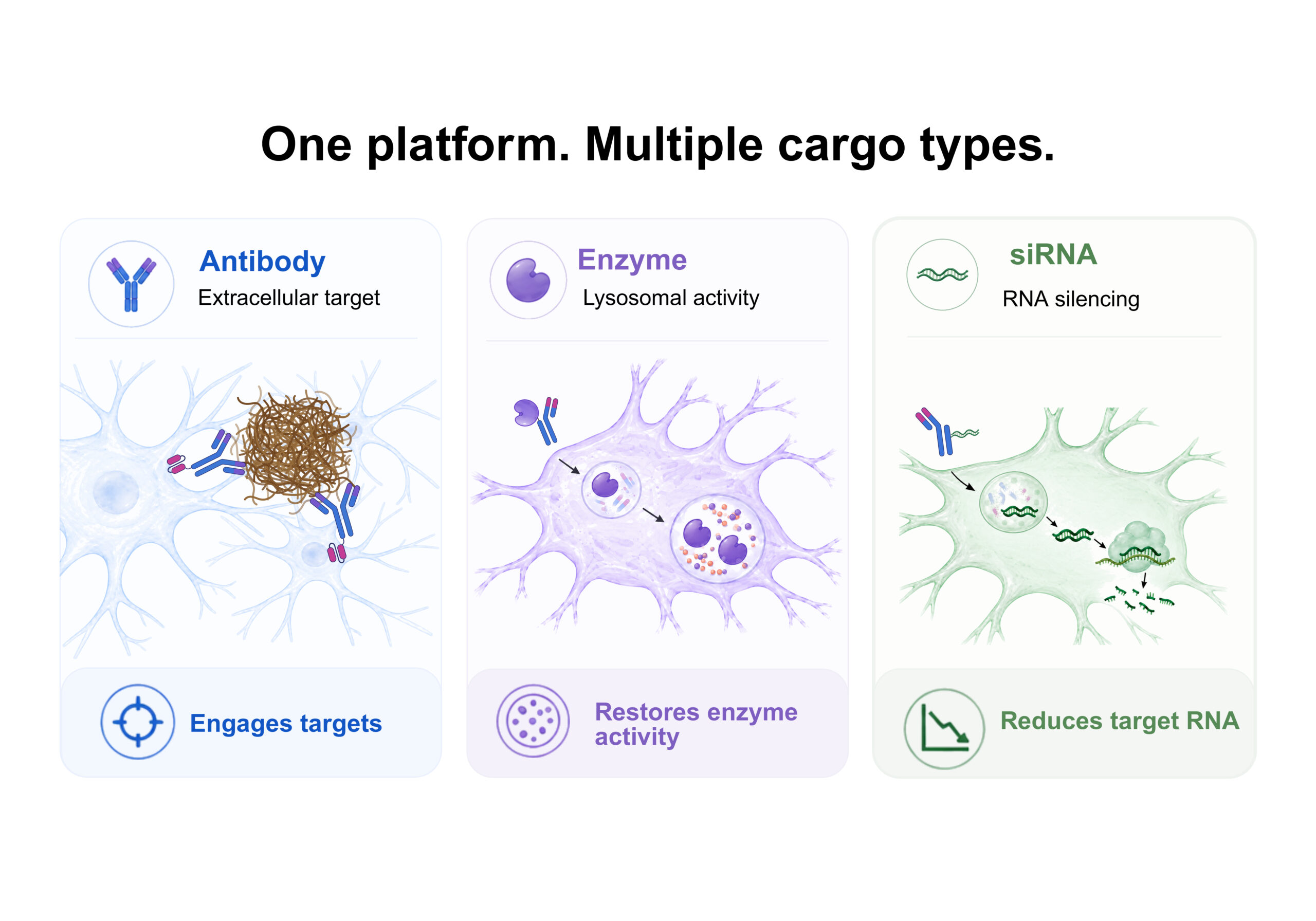
ABC is adaptable across a wide range of therapeutic modalities – including antibodies, enzymes, and nucleic acids – enabling different therapeutic approaches across neurodegenerative diseases.
Tunability
ABC targets a distinct TfR epitope and is engineered with tunable binding properties — affinity, kinetics, and format — optimized on a program-by-program basis. The epitope enables the recruitment of immune cells to remove misfolded proteins, such as amyloid beta, through an active antibody Fc, while balancing efficient brain uptake with an acceptable hematological safety profile. For delivery of enzymes and siRNA into target cells within the brain, the ABC is further tuned to balance brain uptake and safety profile. This program-specific optimization allows ABC to be tailored to the biological, pharmacological, safety, and manufacturability requirements of each therapeutic cargo, whether antibody, enzyme, or nucleic acid.
Translatability
We enable early-stage evaluation of ABC-enabled therapeutics using in vivo models, including mice expressing the human TfR and non-human primates, to assess brain uptake and biological activity. We also prioritize translatable safety by selecting ABC configurations with well-matched binding affinities across human and non-human primate TfR1 — a key criterion that increases the likelihood that the efficacy and safety profiles observed in NHP studies will be predictive of human outcomes.
Convenient dosing route
ABC is designed to support intravenous or subcutaneous dosing, offering a more practical and patient-friendly alternative to invasive CNS delivery approaches such as intrathecal dosing.
ABC in Our Pipeline
ABC powers our preclinical pipeline across multiple programs targeting Alzheimer’s disease, Parkinson’s disease, and Lewy body dementia. We believe ABC positions us at the forefront of advancing therapeutics for neurodegenerative diseases and overcoming the fundamental challenge of drug delivery to the brain.
Featured Publications
Toey Nivitchanyong, December 9-11, 2025